How It Works
Six steps. Twenty minutes.
Suit Up
Your coach gets you fitted and ready. Takes two minutes.
Personalize
Your stimulation level is set just for you — different muscles don't need the same intensity.
Move
Squats, lunges, presses, core work. You're training, not standing still while a machine does it for you.
EMS Activates
At set points, the suit sends pulses while you contract and move.
Coaching
Your coach runs the movements and the intensity the whole time.
Done
Twenty focused minutes. That's it.
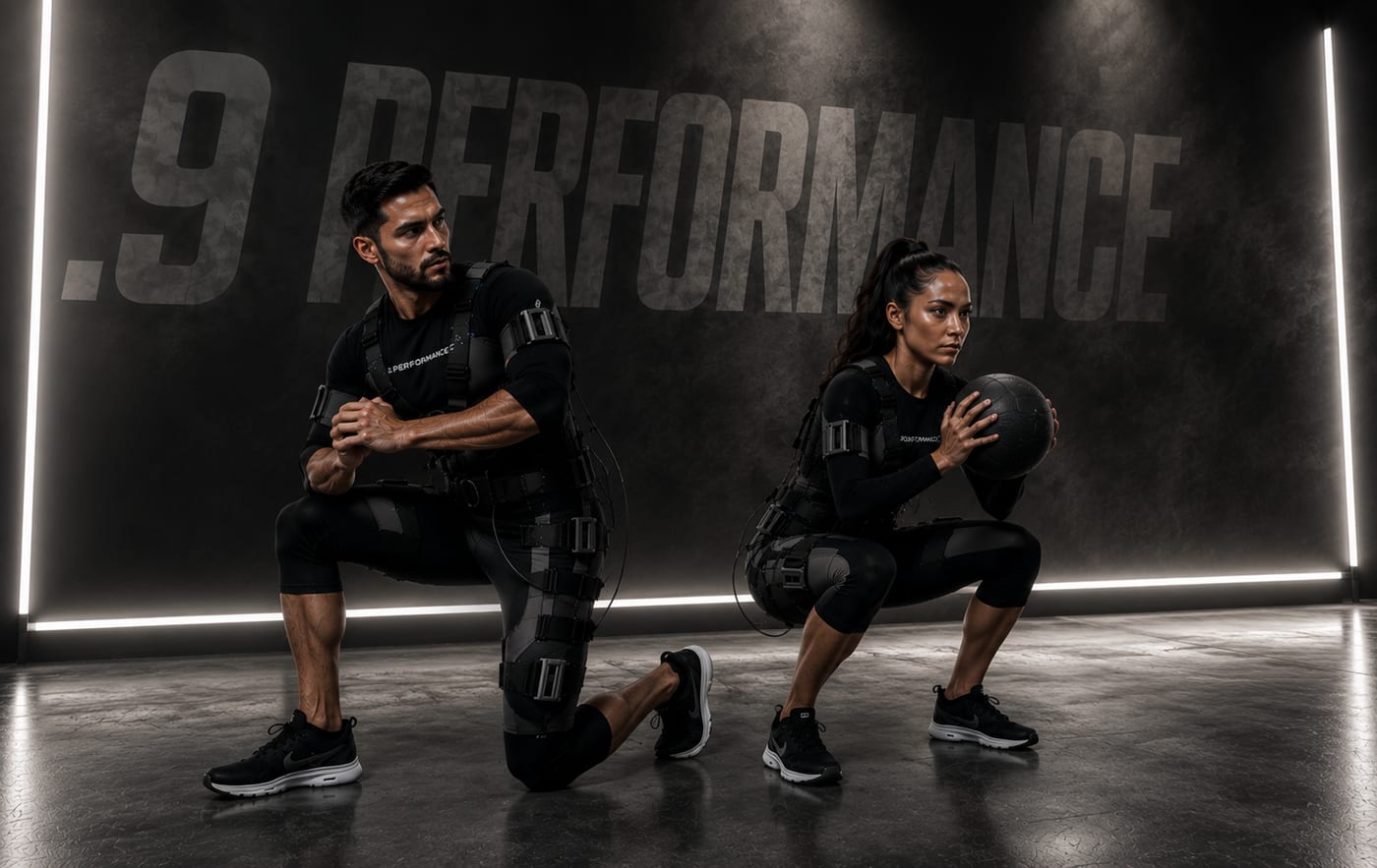
What Does It Feel Like?
Different — but controlled.
You’ll feel a pulsing or contracting sensation across the muscles being stimulated. The intensity is adjustable the entire time, and your coach stays with you throughout the workout. You’re always in control.
One Suit
Multiple muscle groups, one session.
Instead of training one area at a time, the suit positions electrodes over each of these major muscle groups, so multiple areas can be stimulated in the same guided session.
Why 20 Minutes
Built for people who don't have an hour.
20 minutes, one-on-one, full body. That's the entire session — not a warm-up, not a cool-down, just the work.
Your coach guides the session from start to finish and controls the stimulation intensity throughout. This isn't just an EMS session — it's private, time-efficient personal training.
Why It Works
Why EMS actually works.
Here's the simple version: when you move a muscle, your brain sends it a small electrical signal to make it fire. EMS adds more of those signals from the outside. The suit delivers gentle pulses to your muscles while you move, adding extra contractions on top of the ones you're already making. Nothing to learn, no extra technique needed — you just move, and the suit adds to the work.
More muscle, engaged together
Normally, your brain decides how much muscle to recruit for a given movement. EMS adds electrical pulses on top of that, creating extra contractions in the muscles under the suit while you move — so more muscle is active during the same exercise.
Twenty minutes, built for your schedule
Suit on, twenty focused minutes with your coach, suit off. No warm-up lap, no waiting for equipment, no time spent deciding what's next — one session that actually fits into a lunch break.
It's gentle on your joints
There's no barbell loading your spine and no machine forcing a joint through a range it doesn't like. You move your own bodyweight at your own pace while the suit does the extra work — a good fit even if you're coming back from an injury.
You're never guessing
A coach runs every session with you — setting the intensity, watching your form, adjusting as you go. You never have to figure out what to do next.
It's not a trend, it's a tool
Physical therapists and pro sports teams have used EMS for years to help athletes recover and get stronger faster. You're using the same tool, just built into a simple weekly routine.
It fits an actual life
20 minutes, once or twice a week, at your house or ours. No hour-long gym trips, no traffic, no excuses left.
1-on-1 Coaching
You're never training alone.
This isn't a suit we hand you and walk away from. It's personal training, powered by EMS.
Every session is coach-led, start to finish. Your coach:
Your First Visit
What to expect, start to finish.
Consultation
We talk through your goals and training history before anything else.
Safety Screening
We check that EMS training is appropriate for you before your first session.
Suit Fitting
Your coach fits and positions the suit properly over each muscle group.
Calibration
Intensity is set individually for each area — nothing maxed out on day one.
Your Session
20 focused minutes, guided by your coach from first rep to last.
Progression
Your settings evolve with you as you get used to training with EMS.
Certain medical conditions, implanted devices like pacemakers, pregnancy, and other circumstances may make EMS inappropriate or require medical clearance first. See our full safety information.
The Comparison
Traditional gym vs. 9. Performance.
Traditional Gym
9. Performance
At-Home Training
Your coach. Your home. 20 minutes.
We bring the suit, the equipment, and the session plan. You provide the space — no commute, no crowded gym, no equipment to buy.